

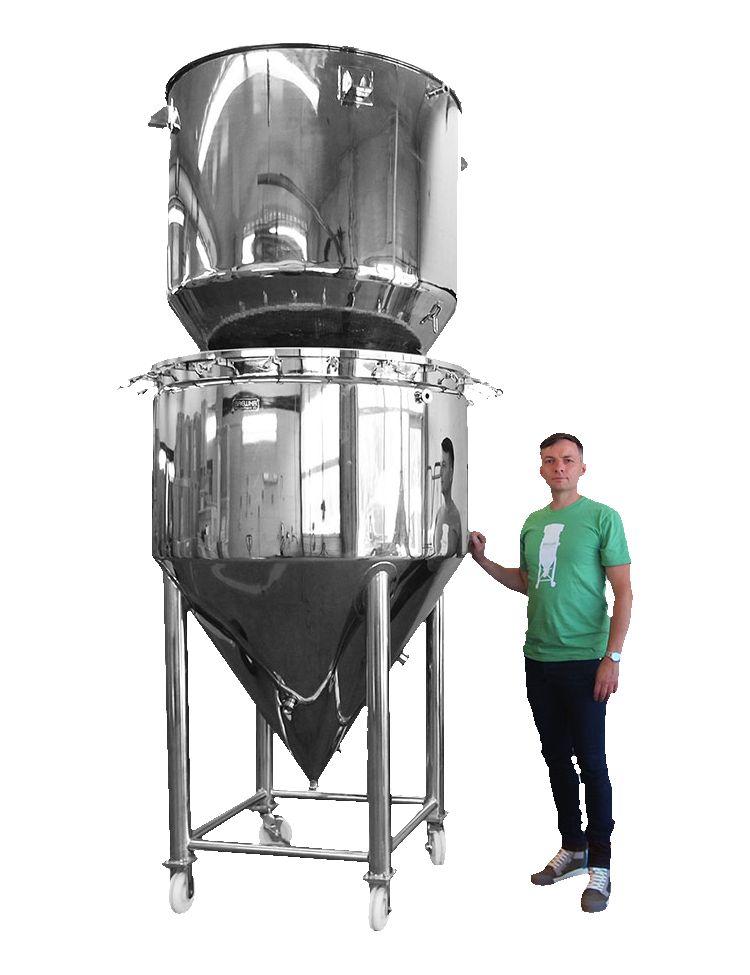
Build production capacity around one flexible 7 BBL electric brewing platform.
The BREWHA® 7 BBL / 8 hL BIAC® system is designed for production breweries, brewpubs and taprooms that want commercial output without a separate brewhouse and a large collection of dedicated process vessels. Its patented process lets you mash, boil, ferment, condition and serve in the same jacketed, insulated stainless steel 5-in-1 vessel.
The included Mash Colander®, pump and touchscreen power-control equipment form the shared brewing platform. As demand grows, add compatible 7 BBL BIAC 5-in-1 fermenters and use the shared brewing hardware with each vessel. This expands production without requiring another Mash Colander or a conventional brewhouse for every increase in fermentation capacity.
Why choose the BREWHA 7 BBL brewing system?
- Commercial 5–7 BBL batches: recommended finished beer volume of 590–819 L per batch.
- Five brewing stages in one vessel: mash, boil, ferment, condition and serve with fewer transfers.
- Expandable production: increase capacity by adding compatible 7 BBL 5-in-1 fermenters that share the core brewing hardware.
- Efficient use of floor space: consolidate brewhouse and cellar functions into a compact system.
- Electric operation: matched heating, pumping and touchscreen control equipment supports repeatable brewing.
- Direct serving capability: condition and serve from the vessel where appropriate for your operating model.
- Accessible cleaning: the completely removable lid provides direct access for inspection and cleaning.
7 BBL / 8 hL BIAC system specifications
- Recommended beer volume: 590–819 L / 5–7 BBL
- Maximum grain bill: 225 kg / 500 lb
- Maximum pre-boil volume: 1,000 L / 264 US gal
- Gross vessel volume: 1,080 L / 286 US gal
- Fermenter dimensions: 190 cm / 77 in high with lid removed; 130 cm / 51 in outside diameter
- Combined fermenter and Mash Colander height: 300 cm / 119 in
- Recommended ceiling height: 414 cm / 163 in; approximately 366 cm / 144 in minimum over the brewhouse
- Pressure rating: 14.9 psi vessel; 7 psi jacket
- System mass: approximately 680 kg / 1,500 lb
- Heating and pump load: 47.5 kW electric heaters plus 1 hp pump
- Electrical service: three-phase only; 125 A at 240 V or 150 A at 208 V, with three hots, neutral and ground
Review the complete BIAC specifications and confirm voltage, phase, amperage, ceiling clearance, cooling, drainage and local approval requirements before ordering. Final electrical acceptance rests with the local Authority Having Jurisdiction.
Scale production by adding brewing vessels
One 7 BBL BIAC fermenter is included with the system. With a roughly three-week tank cycle, the original configuration can theoretically support approximately 120 BBL per year. Actual output depends on recipes, fermentation time, conditioning, cleaning, packaging or direct serving, staffing and the production calendar.
Additional 7 BBL BIAC 5-in-1 vessels can be brewed in using the shared Mash Colander, pump and power-control hardware. This modular approach lets a brewery add cellar and brewing capacity in stages as sales grow.
Serve fresh beer from the vessel where it was brewed
A practical path from brewer to brewery owner
How the BIAC brewing process works
- Mash: grain rests in the removable Mash Colander while wort circulates through the grain bed.
- Boil: lift out the Mash Colander and boil directly in the vessel below.
- Chill: cool the wort using the selected BREWHA chilling configuration.
- Ferment: pitch yeast and control fermentation temperature through the vessel jacket.
- Condition and serve: condition in the same pressure-capable vessel and serve directly when appropriate.
Cleaning and sanitation
Because the wort is boiled in the same vessel used for fermentation, boil heat sanitizes the vessel before fermentation and eliminates the separate chemical-sanitizing step normally required when transferring cooled wort into a different fermenter. Routine cleaning, inspection and appropriate sanitation of fittings, hoses and other product-contact components are still required.
Plan the complete brewery before ordering
A successful 7 BBL installation depends on more than tank capacity. Confirm the building's three-phase electrical service, ceiling and lifting clearance, floor loading, drainage, water supply, chilling capacity, ventilation, ingredient handling, packaging or direct-serving plan, and local regulatory requirements.
- Size your brewery system
- See what is included with a BIAC system
- See what else your brewery may require
- Request brewery planning and configuration help
7 BBL brewery planning questions
Is this system suitable for a production brewery?
Yes. The 590–819 L recommended batch range suits production breweries, brewpubs and larger taprooms. Suitability ultimately depends on annual sales targets, tank cycle, beer mix, packaging plans and service model.
Can the brewery be expanded later?
Yes. Compatible 7 BBL BIAC 5-in-1 vessels can be added and brewed in using the shared Mash Colander and core brewing hardware. Plan electrical, chilling, floor space and workflow for future vessels during the initial build-out.
Does the system require three-phase power?
Yes. This size is configured for three-phase service: 125 A at 240 V or 150 A at 208 V. Confirm the available building service and local electrical requirements before selecting a configuration.
Does boiling in the fermenter remove all cleaning requirements?
No. The boil sanitizes the fermentation vessel and avoids a separate pre-fermentation chemical-sanitizing step associated with transferring into another fermenter, but the system and all product-contact components still require proper cleaning, inspection and maintenance.
Installation, operation and brewery resources
- BREWHA brewing workshop and masterclass
- BIAC assembly and installation instructions
- How to start a microbrewery, with planning examples
- Explore the benefits of the BIAC process
- Read the BIAC brewing system manual
- See what brewery owners have built with BREWHA
Need help confirming whether 7 BBL is the right production scale? Use the brewery system size calculator or contact BREWHA for configuration and facility-planning help.