
Commercial Plate Heat Exchanger Wort Chiller
Commercial Plate Heat Exchanger Wort Chiller
Couldn't load pickup availability
Commercial plate heat exchanger for wort chilling, heating, and brewery liquid transfer
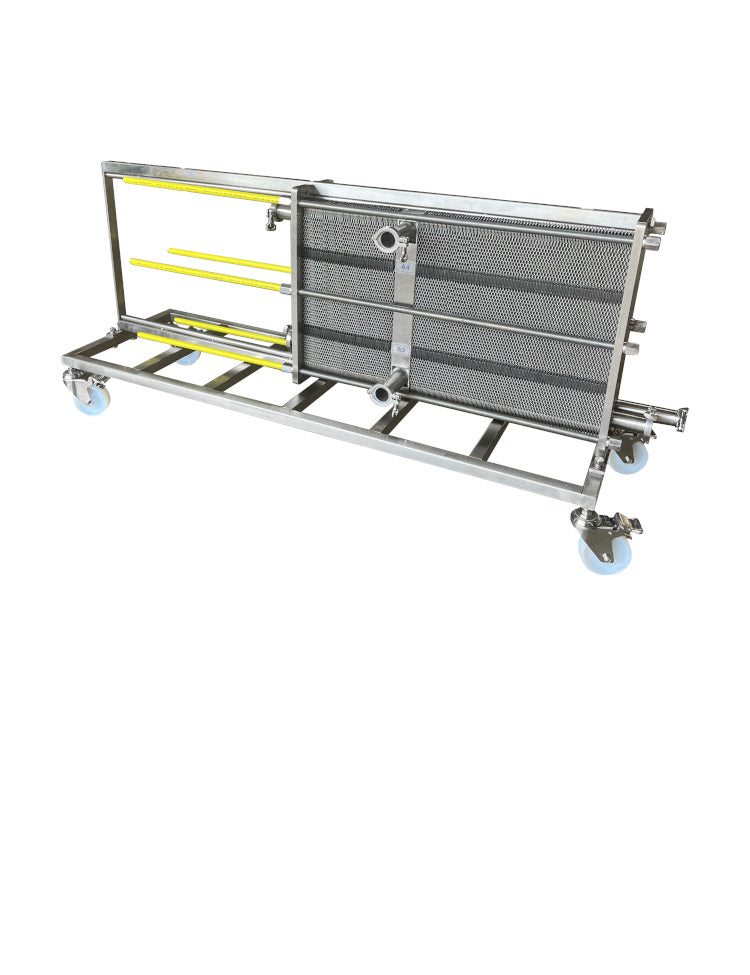
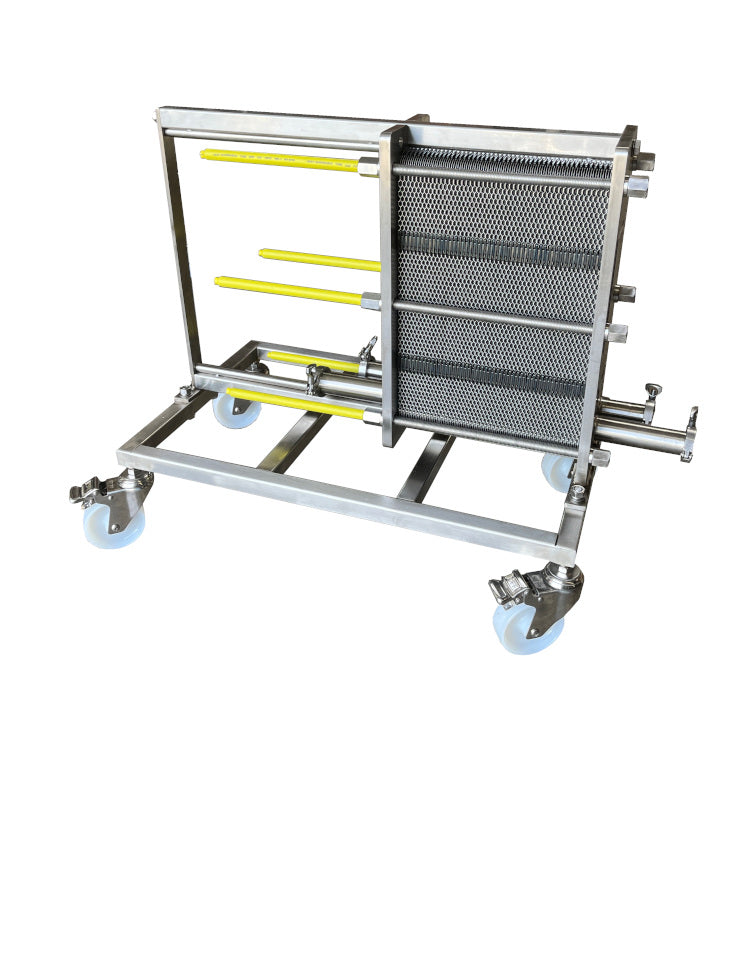
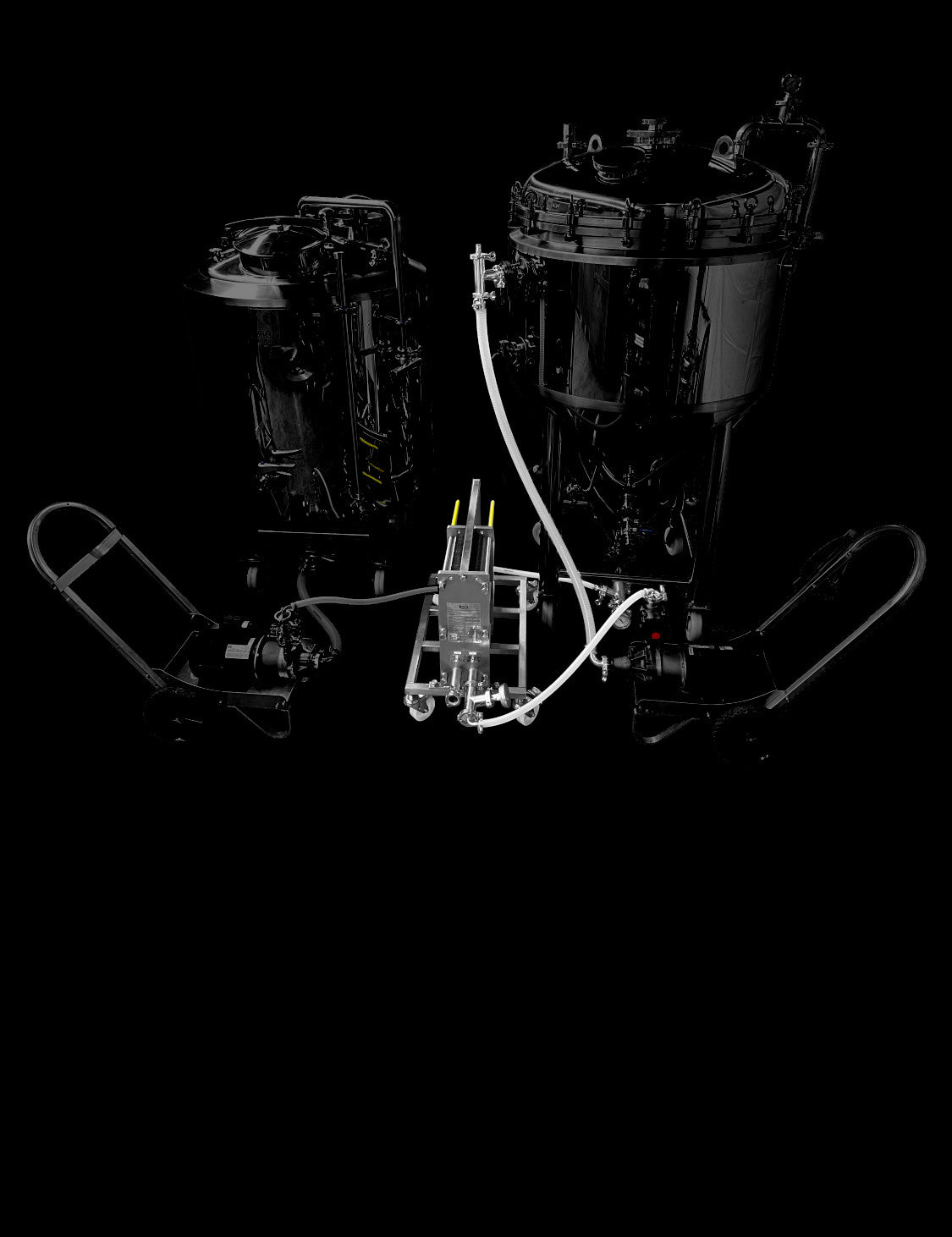
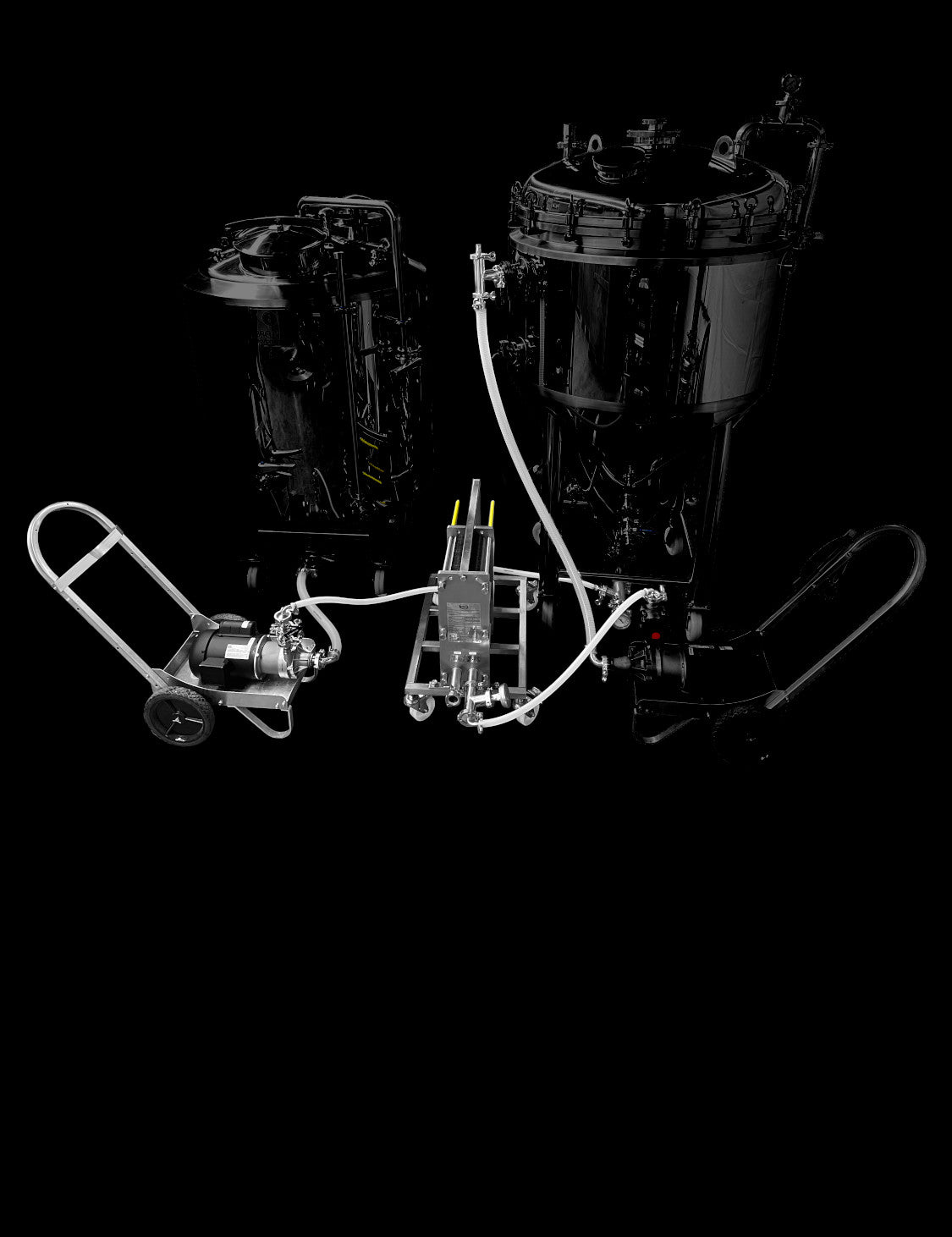
BREWHA portable plate heat exchangers are high-efficiency brewery heat exchangers for cooling wort, heating brewery liquids, and transferring heat between hot and cold liquids. They provide a large heat-transfer surface area in a compact stainless steel assembly, helping brewers control temperature more efficiently during production. They pair well with BREWHA brewery pumps and transfer equipment, brewery hoses, and other heating and cooling equipment.
- Best for: breweries that need efficient wort chilling, hot-water heating, glycol cooling, or liquid-to-liquid heat transfer.
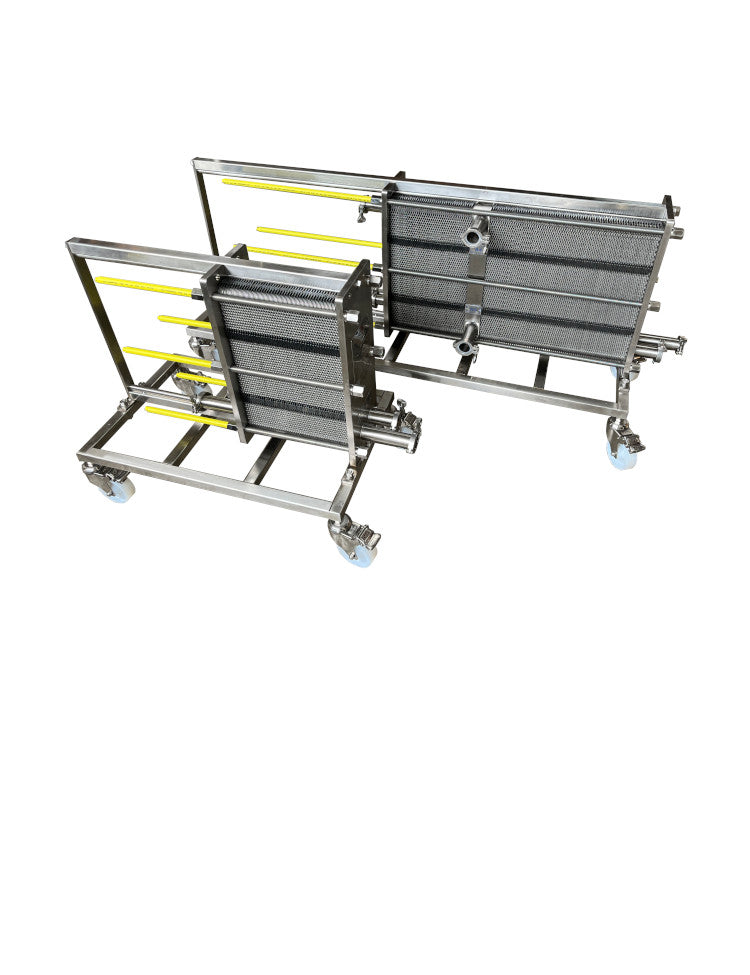
- Available sizes: 95-plate and 228-plate models.
- Plate material: 316 stainless steel plates.
- Frame material: 304 stainless steel.
- Fittings: 1 in SMS sanitary connections.
- Design: gasketed plate heat exchanger that can be disassembled for cleaning and inspection.
- Portable setup: mounted on a cart for easier movement and brewery use.
Why use a plate heat exchanger in a brewery?
A plate heat exchanger moves heat from one liquid stream to another. In brewing, this is commonly used to cool hot wort after the boil, heat water, recover heat, or exchange heat between wort, water, glycol, or other brewery liquids. For complete brewing-system planning, see BREWHA's all-in-one pro brewing systems.
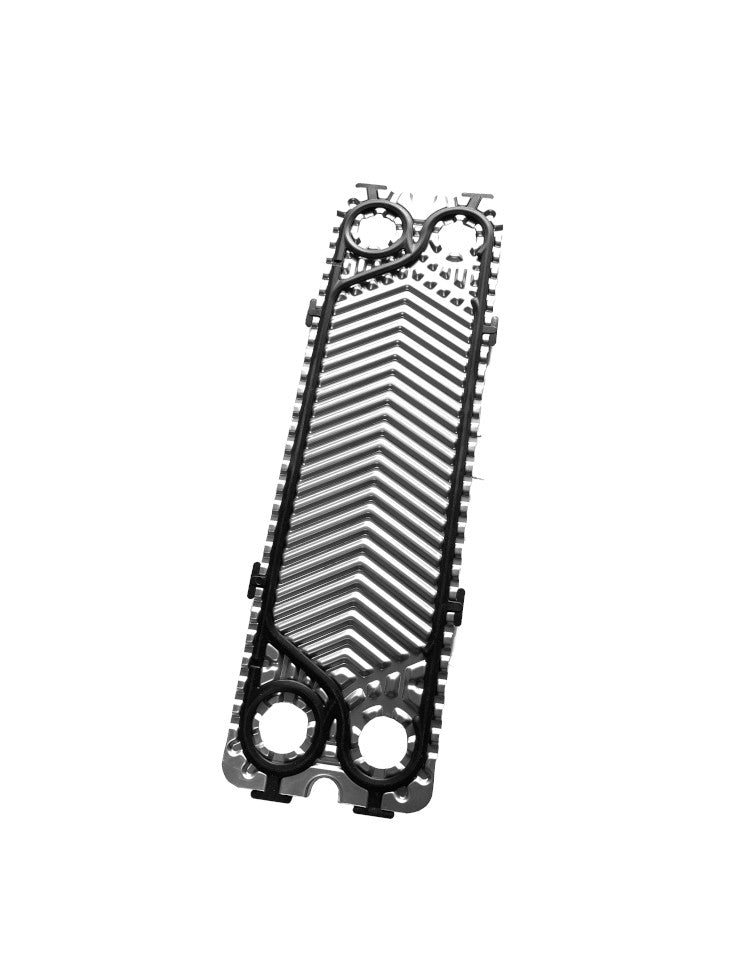
The thin stainless steel plates create a large surface area for heat transfer. This allows the exchanger to deliver strong heating or cooling performance while taking up far less space than many tank-based temperature-control methods.
Choose the right plate heat exchanger size
The right size depends on your batch volume, flow rate, incoming liquid temperature, target exit temperature, and whether you are heating or cooling. The 95-plate model is suited to smaller brewery applications, while the 228-plate model provides more heat-transfer area for larger or higher-flow processes.
| Model | Best fit |
|---|---|
| 95 plate | Smaller brewery heating and cooling applications where compact size and efficient heat transfer are needed. |
| 228 plate | Larger batches, higher-flow applications, or brewers who need more heat-transfer capacity. |
Product specifications
| Product type | Portable gasketed plate heat exchanger |
|---|---|
| Available plate counts | 95 plates or 228 plates |
| Plates | 316 stainless steel |
| Frame | 304 stainless steel |
| Connections | 1 in SMS sanitary fittings |
| Cleaning access | Gasketed design can be opened for cleaning and inspection |
Common brewery uses
- Cooling hot wort after the boil before fermentation.
- Heating brewery water or process liquids.
- Using cold water, chilled water, or glycol for temperature reduction.
- Recovering heat between hot and cold liquid streams.
- Improving temperature-control efficiency in a commercial brewery process.
How to get better cooling performance
Heat exchanger performance depends on the plate count, flow rates, inlet temperatures, desired outlet temperatures, and the temperature difference between the hot and cold liquids. For the best performance, run the hot and cold liquid streams in opposite directions. This counterflow arrangement improves heat transfer and helps achieve lower wort exit temperatures.
If groundwater is too warm to reach pitching temperature in one pass, brewers can use chilled water or glycol, reduce wort flow rate, increase cooling-liquid flow rate, or use a larger heat exchanger model.
Cleaning and maintenance
Because wort, hop material, and break material can enter the exchanger, good cleaning practices are important. The gasketed design allows the exchanger to be opened for inspection and cleaning, which is useful for breweries that want more service access than a sealed brazed plate chiller provides.
- Keep grain, hop matter, and heavy solids out of the heat exchanger whenever possible.
- Flush promptly after use.
- Clean according to your brewery sanitation process.
- Backflush when appropriate to help remove trapped material.
- Inspect plates and gaskets as part of regular brewery maintenance.
Connection notes
These exchangers use 1 in SMS sanitary fittings. Confirm your brewery hose, pump, valve, and fitting layout before ordering. If your brewery uses tri-clamp connections, adapters may be required. Browse BREWHA sanitary fittings and valves if you need clamps, gaskets, valves, reducers, or adapters for your setup.
Related BREWHA equipment and resources
- Heating and cooling equipment for brewery temperature-control components.
- Filter, mix, transfer, and pump equipment for moving wort, water, and brewery liquids.
- Silicone hoses and stainless hose barbs for brewery liquid transfer connections.
- Sanitary fittings and valves for building out your heat exchanger connections.
- Brewery installation articles for setup and equipment guidance.
- BREWHA brewery equipment specifications for planning a complete brewery system.
- Need help choosing equipment? Contact BREWHA for sizing and setup guidance.
Frequently asked questions
What does this plate heat exchanger do?
It transfers heat between two liquid streams. In a brewery, it can be used to chill hot wort, heat liquids, or exchange heat between wort, water, glycol, or other process liquids.
Which size should I choose?
Choose the 95-plate model for smaller or lower-flow applications and the 228-plate model when you need more heat-transfer capacity. Batch size, flow rate, incoming cooling-liquid temperature, and target outlet temperature all affect sizing.
Can this be used as a wort chiller?
Yes. A common brewery use is chilling hot wort after the boil before transferring it to the fermenter.
Can I use glycol with this heat exchanger?
Yes, glycol or chilled water can be used where the brewery system is designed for it. Make sure all pumps, hoses, fittings, and cooling-loop components are compatible with the cooling liquid and operating conditions.
Is this a brazed plate chiller?
No. This is a gasketed plate heat exchanger. The gasketed design can be opened for cleaning and inspection.
How do I keep it from clogging?
Reduce solids before they enter the exchanger. Use good kettle separation practices, avoid sending hop matter or grain through the unit, and flush or backflush after use.
Does this use tri-clamp fittings?
The unit uses 1 in SMS sanitary fittings. If your brewery uses tri-clamp connections, confirm what adapters or hose connections are needed before ordering.
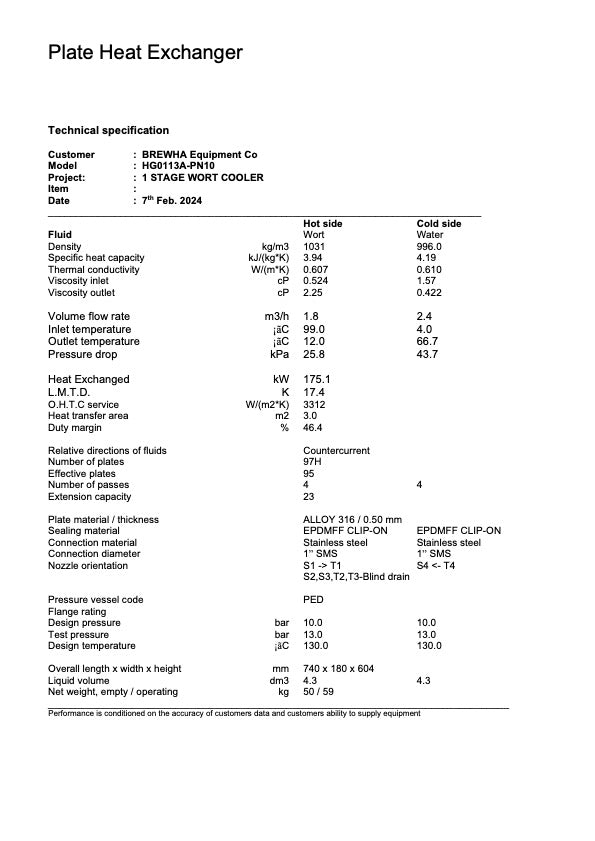
Plate Heat Exchanger Wort Chiller Design Specifications
Direction of fluids: Countercurrent
Plate material / thickness: Alloy 316 / 0.50mm
Sealing material: EPDMFF Clip-on
Connection material: 304
Connection diameter: 1" SMS Sanitary Tri-clamp
Design pressure: 10 bar
Test pressure: 13 bar
Design maximum temperature: 130°C / 266°F
Single 1-Stage Plate Heat Exchanger Chiller
Volume flow rate hot side / cold side: 1.8m3 flow per hour / 2.4m3 flow per hour
Hot side inlet / outlet temperature / pressure drop: 99°C/12°C/25.8kPa
Cold side inlet / outlet temperature / pressure drop: 4°C/67°C/43.7kPa
Heat Exchanged: 175.1 kW
Heat transfer area: 3.0m2 / 32.0ft2
Number of effective high efficiency thermal heat transfer plates: 95
Number of passes: 4
Dimensions (lxwxh in mm): 740x180x704
Liquid volume per side: 4.3L
Gross weight: 59kg
Double 2-Stage Plate Heat Exchanger Chiller
Section 1 (tap)
Volume flow rate hot side / cold side: 1.8m3 flow per hour / 1.5m3 flow per hour
Hot side inlet / outlet temperature / pressure drop: 99°C/30°C/37.3kPa
Cold side inlet / outlet temperature / pressure drop: 15°C/95°C/25.6kPa
Heat Exchanged: 175.1 kW
Heat transfer area: 4.6m2 / 49.0ft2
Number of effective high efficiency thermal heat transfer plates: 143
Section 2 (ice water)
Volume flow rate hot side / cold side: 1.8m3 per hour / 1.3m3 per hour
Hot side inlet / outlet temperature / pressure drop: 30°C/12°C/37.5kPa
Cold side inlet / outlet temperature / pressure drop: 4°C/27.9°C/18.9kPa
Heat Exchanged: 36.29 kW
Heat transfer area: 2.5m2 / 27.0ft2
Number of effective high efficiency thermal heat transfer plates: 79
Number of plate passes: 6*12H/4
Dimensions (l by w by h in mm): 1140x180x704
Liquid volume per side: 9L
Gross weight: 100kg
Replacement plates and gaskets are for the BREWHA Single Stage (BHSSSSHE) and Double Stage (BHSSDSHE) Heat Exchangers only.
Share