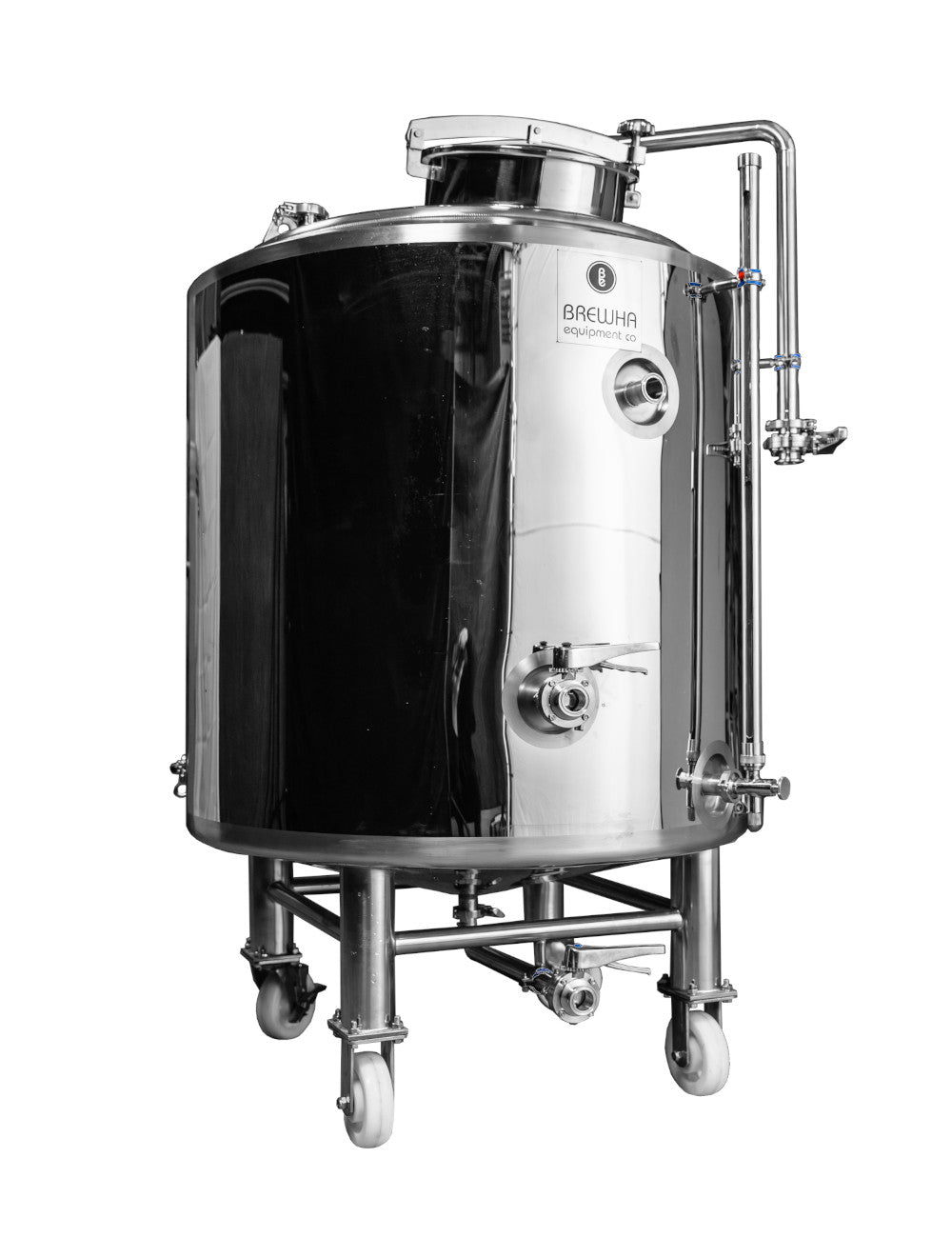
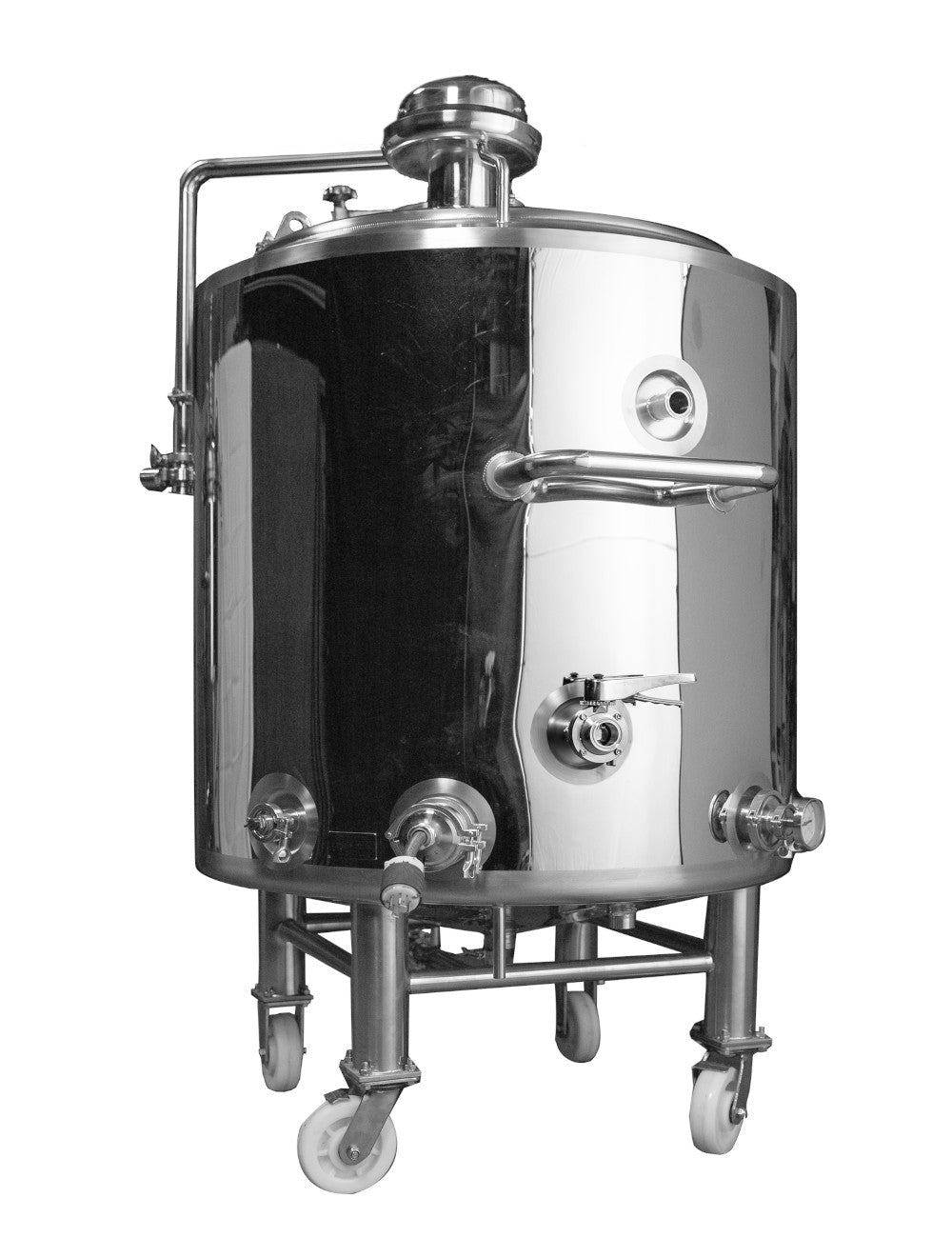
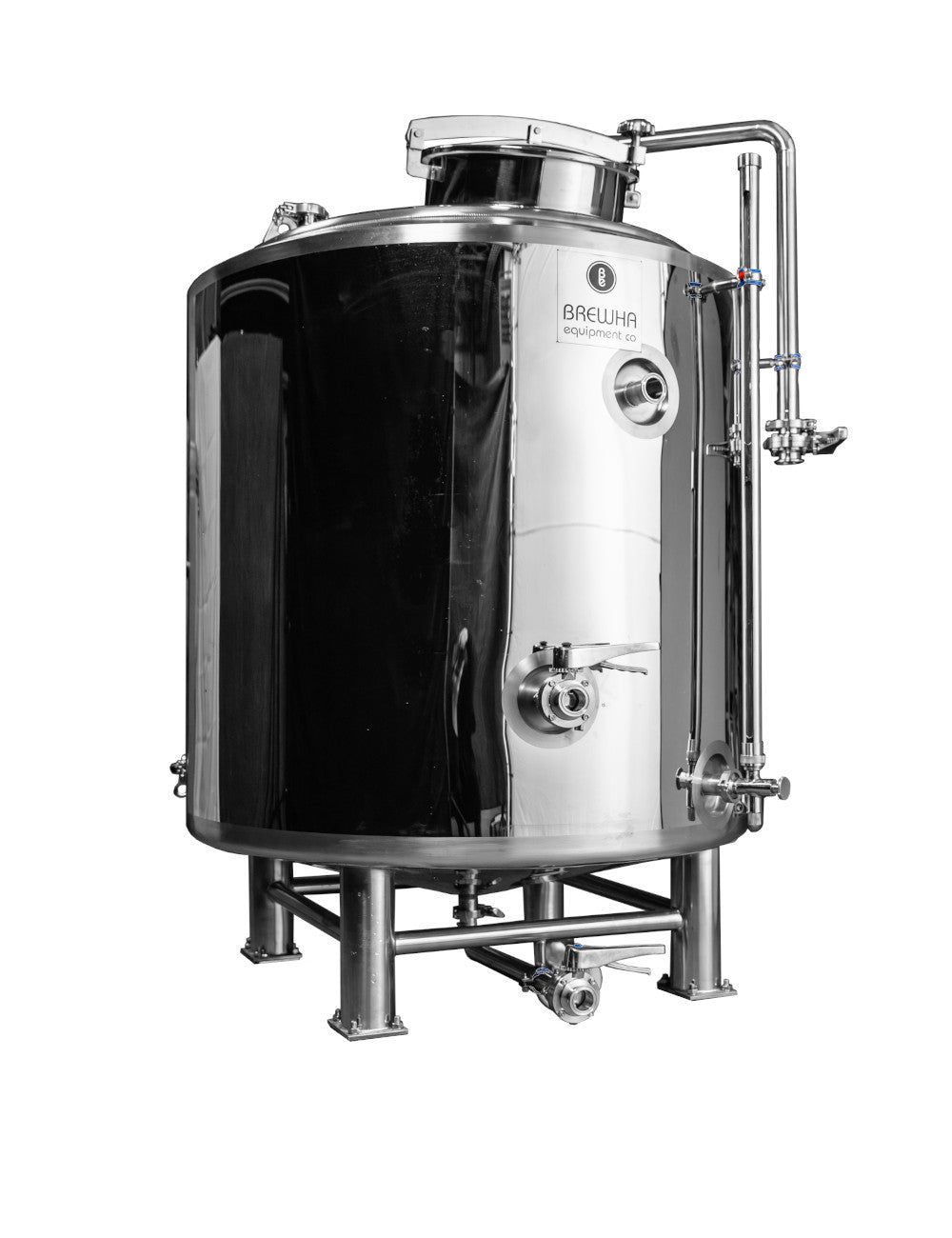
Commercial Hot Liquor Tank (HLT) + Cold Liquor Tank (CLT)
Commercial Hot Liquor Tank (HLT) + Cold Liquor Tank (CLT)
Couldn't load pickup availability
One tank for hot brewing water, chilled knockout water—or both.
Improve brewery efficiency with a versatile, insulated stainless steel liquor tank designed for commercial brewing.
The BREWHA Commercial HLT/CLT can be configured as a Hot Liquor Tank (HLT) for heating and storing strike and sparge water, a Cold Liquor Tank (CLT) for storing chilled water for wort knockout, or as a flexible hot/cold water tank that adapts to your brewery's production needs.
Available in 5 BBL, 10 BBL and 24 BBL sizes, with options for electric heating, steam heating and chilled-water/glycol cooling.
Not sure which configuration you need?
Tell us your brewhouse size, batches per day and utilities, and we'll help you configure the right HLT/CLT system.
One Tank. Multiple Jobs.
Commercial breweries need significant volumes of water at the right temperature—and often at the right time.
The BREWHA HLT/CLT gives you a flexible water-management vessel that can be integrated into your brewing process for heating, cooling and water storage.
🔥 Use It as a Hot Liquor Tank
Heat and hold brewing water for:
- Strike water
- Mash water
- Sparge water
- Cleaning and sanitation
- Back-to-back brew days
Prepare hot water ahead of production so your brewer can spend less time waiting for water to reach temperature.
❄️ Use It as a Cold Liquor Tank
Store chilled water for:
- Wort knockout
- Warm incoming groundwater conditions
- Faster cooling through a plate heat exchanger
- More consistent knockout temperatures
- High-production brewing schedules
A CLT can be especially useful when incoming water is too warm to efficiently cool wort to fermentation temperature.
↔️ Configure It Around Your Brewery
Need hot water today and chilled water for another part of your process?
The BREWHA HLT/CLT is designed to give commercial breweries more flexibility than a conventional single-purpose water tank.
Configure the vessel and supporting equipment around your brewery's water, heating, cooling and production requirements.
Why Add an HLT or CLT to Your Brewery?
Start Brewing Faster
Instead of beginning the brew day by waiting for a large volume of water to heat, an HLT allows brewing water to be prepared in advance.
Arrive ready to brew.
Improve Wort Knockout
Warm municipal or well water can make it difficult for a plate heat exchanger to bring wort down to fermentation temperature quickly.
A CLT lets you prepare a supply of cold water before knockout, giving your heat exchanger a colder cooling medium and helping reduce knockout temperatures and cooling time.
Prepare for Multiple Batches
When brewing back-to-back batches, water availability can become a production bottleneck.
Having hot or chilled water ready when you need it can help keep the brewhouse moving between batches.
Build Around Your Available Utilities
BREWHA's commercial liquor tanks can be configured around electric heating, steam heating and chilled-water/glycol cooling systems, giving breweries flexibility when designing or expanding their production facility.
Make Better Use of Brewery Floor Space
Instead of limiting the vessel to a single task, the HLT/CLT design gives breweries the option to use the same insulated tank for different water-management applications as production requirements evolve.
How a Hot Liquor Tank Works
A brewery Hot Liquor Tank (HLT) stores and heats the hot water—brewers traditionally call it "liquor"—used throughout the brewing process.
A typical workflow looks like:
Water Supply → HLT → Strike / Mash / Sparge Water → Brewhouse
Depending on your configuration, water can be heated electrically or using steam.
The insulated vessel helps retain heat until the water is required.
An HLT can help you:
- Prepare strike water before brewing begins
- Maintain a supply of hot sparge water
- Reduce waiting between brewing steps
- Support consecutive batches
- Keep hot water available for brewery cleaning
How a Cold Liquor Tank Works
A brewery Cold Liquor Tank (CLT) stores water that has been chilled before it is needed for wort cooling.
A typical workflow looks like:
Water Supply → CLT / Chiller → Plate Heat Exchanger → Cooled Wort → Fermenter
When hot wort passes through the heat exchanger, cold water flowing in the opposite direction removes heat from the wort.
Pre-chilling that water can be particularly valuable during warmer months or in locations where groundwater temperatures are too high to achieve the desired knockout temperature efficiently.
A CLT can help you:
- Reduce wort knockout temperatures
- Improve cooling performance in warm climates
- Reduce dependence on seasonal groundwater temperatures
- Prepare cooling water before the brew is finished
- Support faster production schedules
Choose the Right Size for Your Brewery
The correct HLT/CLT capacity depends on your brewhouse size, brewing schedule, water temperatures and how you intend to use the tank.
| Model | Nominal Capacity | Common Application |
|---|---|---|
| 5 BBL / 585 L | 585 L / 5 BBL | Smaller commercial breweries and 3–5 BBL brewing systems |
| 10 BBL / 1,170 L | 1,170 L / 10 BBL | Production breweries and approximately 5–10 BBL systems |
| 24 BBL / 2,800 L | 2,800 L / 24 BBL | Larger production systems and multi-batch brewing |
These are general guidelines only. Required capacity depends on your brewing process and production schedule.
Not sure what size you need?
We'll help determine the appropriate tank, heating and cooling configuration based on your brewery.
Heating Options
Electric HLT
Electric immersion heating provides a straightforward way to heat brewing water where adequate electrical service is available.
The tank includes ports that allow compatible electric heating elements to be installed according to the brewery's required heating capacity and available electrical service.
Electric heating can be a good choice for breweries looking for:
- Simple installation
- Precise temperature control
- No boiler requirement
- Automated or scheduled water heating
Heating elements, power controls and temperature controls are configured separately according to your installation requirements.
Steam HLT
For breweries with an existing steam system, the vessel can be configured for steam heating.
Steam can provide rapid heating for larger water volumes and may integrate well into facilities already using steam elsewhere in the brewery.
Contact BREWHA to confirm the correct steam configuration for your application.
Cooling Options
The cooling jacket can be connected to an appropriately sized cooling system to prepare chilled water for CLT applications.
Your required cooling capacity will depend on factors including:
- Tank size
- Incoming water temperature
- Desired water temperature
- Ambient brewery temperature
- Available chilling time
- Wort knockout volume
- Brewing frequency
BREWHA can help determine the appropriate cooling configuration for your brewery.
Built for Commercial Brewery Use
Insulated Stainless Steel Construction
Durable stainless steel construction provides a sanitary, corrosion-resistant vessel suitable for brewery environments.
Insulation helps reduce unwanted heat gain or loss when storing hot or chilled water.
Heating Element Connections
Dedicated connections allow electric heating elements to be installed for HLT applications.
Heating and Cooling Jacket
Configure the jacket for the heating or cooling requirements of your brewery.
Brewery-Friendly Connections
Sanitary connections make it easier to integrate the vessel with pumps, hoses and other brewery equipment.
Multiple Capacities
Choose from 5 BBL, 10 BBL and 24 BBL sizes to match different brewhouse and production requirements.
Specifications
5 BBL / 585 L HLT/CLT
- Nominal capacity: 585 L / 5 BBL
- Construction: Insulated stainless steel
- Heating: Electric heating element compatible; steam configuration available
- Cooling: Jacketed for compatible cooling configuration
- Connections: Sanitary brewery connections
Dimensions: OD 110cm/43"; Height 185cm/73"
Weight: 250kg/550lb
Heating connections: two 3" sanitary tri-clamp connection for heater (or temperature gauge)/3/4"NPT for steam
Cooling connections: 1.5" sanitary tri-clamp for water jacket
Other: 43cm/17" manway
10 BBL / 1,170 L HLT/CLT
- Nominal capacity: 1,170 L / 10 BBL
- Construction: Insulated stainless steel
- Heating: Electric heating element compatible; steam configuration available
- Cooling: Jacketed for compatible cooling configuration
- Connections: Sanitary brewery connections
Dimensions: OD 110cm/43"; Height 245cm/96"
Weight: 410kg/902lb
Heating connections: two 3" sanitary tri-clamp connection for heater (or temperature gauge)/3/4"NPT for steam
Cooling connections: 1.5" sanitary tri-clamp for water jacket and CIP
Other: 43cm/17" manway
24 BBL / 2,800 L HLT/CLT
- Nominal capacity: 2,800 L / 24 BBL
- Construction: Insulated stainless steel
- Heating: Electric heating element compatible; steam configuration available
- Cooling: Jacketed for compatible cooling configuration
- Connections: Sanitary brewery connections
Dimensions: OD 180cm/71"; Height 245cm/96"
Weight: 660kg/1450lb
Heating connections: two 3" sanitary tri-clamp connection for heater (or temperature gauge)/3/4"NPT for steam
Cooling connections: 1.5" sanitary tri-clamp for water jacket
Other: 43cm/17" manway
Build a Complete HLT or CLT System
The tank is only one component of a complete brewery water-management system.
Depending on your application, your installation may also require:
For an Electric HLT
- Electric heating element(s)
- Temperature controller
- Power controller
- Brewery pump
- Hoses and fittings
For a Steam HLT
- Suitable steam supply
- Steam controls and associated hardware
- Temperature control
- Brewery pump
- Hoses and fittings
For a CLT
- Appropriately sized chiller
- Temperature control
- Brewery pump
- Hoses and fittings
- Plate heat exchanger for wort knockout
Don't know which components you need?
Tell us how you brew and we'll help put together a compatible configuration.
Hot Liquor Tank or Cold Liquor Tank: Which Do I Need?
Choose an HLT if your main challenge is preparing and maintaining sufficient volumes of hot brewing water.
Choose a CLT if your main challenge is cooling wort efficiently because your incoming water is too warm.
Consider a hot/cold configuration if you want greater flexibility from the vessel or expect your brewery's production requirements to change.
For many breweries, the right answer depends on the brewhouse size, number of daily batches, incoming water temperature, desired knockout temperature and available utilities.
BREWHA can help you work through those variables before ordering.
Frequently Asked Questions
What is a hot liquor tank?
A Hot Liquor Tank (HLT) is a brewery vessel used to heat and store water for brewing. Despite the name, "liquor" in this context simply means brewing water.
Hot liquor is commonly used for strike water, mashing, sparging and brewery cleaning.
What is a cold liquor tank?
A Cold Liquor Tank (CLT) stores chilled water for brewery processes, most commonly wort cooling.
Cold water from the CLT can be pumped through a plate heat exchanger to remove heat from hot wort before it enters the fermenter.
Do I need a cold liquor tank?
Not every brewery requires one.
If your incoming groundwater is cold enough to achieve your desired wort knockout temperature efficiently, a dedicated CLT may not be necessary.
A CLT becomes more valuable when incoming water is warm, cooling times are long, or increased brewery production requires faster and more predictable knockout.
Can this tank be used as both an HLT and CLT?
The BREWHA commercial liquor tank is designed to support hot- and cold-water applications depending on its configuration and connected equipment.
Contact BREWHA before ordering if you intend to use the vessel for both applications so we can recommend an appropriate setup.
What size hot liquor tank do I need?
HLT sizing depends on more than brewhouse capacity.
You should consider:
- Strike-water volume
- Sparge-water volume
- Number of batches per day
- Time available to reheat water
- Cleaning-water requirements
- Heating capacity
A brewery producing multiple batches per day may benefit from a larger HLT than a brewery using the same size brewhouse for one daily batch.
What size CLT do I need?
CLT sizing depends on your knockout-water requirements, incoming water temperature, desired chilled-water temperature, wort volume and brewing schedule.
Contact BREWHA with those details and we can help determine an appropriate capacity.
How long does the water take to heat?
Heating time depends on:
- Water volume
- Starting water temperature
- Target temperature
- Heating-element power or steam capacity
- Heat losses
Higher heating capacity reduces recovery time, but the installation must also be matched to the electrical or steam service available at your brewery.
Can I use electric heating?
Yes. The tank can be configured with electric immersion heating for HLT applications.
Heating elements, temperature controls and appropriate power controls should be selected for the tank size, desired heating time and electrical service available at the brewery.
Can the tank be steam heated?
A steam-heated configuration is available for breweries equipped with a suitable steam system.
Contact BREWHA to confirm requirements before ordering.
Can I connect the tank to a glycol chiller?
The tank can be configured for cooling using an appropriate chilling system.
The required chiller capacity depends on the volume of water, starting temperature, target temperature and amount of time available for cooling.
Why use a CLT instead of cooling wort directly with groundwater?
A plate heat exchanger cannot normally cool wort below the temperature of the cooling water entering it.
If summer groundwater enters your brewery at a relatively high temperature, achieving fermentation temperature may become difficult or require additional cooling.
A CLT allows water to be chilled before knockout, providing a colder cooling medium when needed.
Can BREWHA help size the complete system?
Yes.
Send us your:
- Brewhouse size
- Typical batch volume
- Number of batches per day
- Incoming water temperature
- Desired hot-water temperature
- Desired wort knockout temperature
- Available electrical service and/or steam
- Existing chiller information, if applicable
We'll help determine an appropriate tank and supporting equipment configuration.
Spend Less Time Waiting for Water
Water heating and wort cooling shouldn't determine how quickly your brewery can produce the next batch.
Build an HLT/CLT system around your production requirements and have hot or chilled water ready when the brewhouse needs it.
Available Sizes
- 5 BBL / 585 L
- 10 BBL / 1,170 L
- 24 BBL / 2,800 L
Not sure what to order?
Contact BREWHA for a brewery configuration recommendation.
Share